
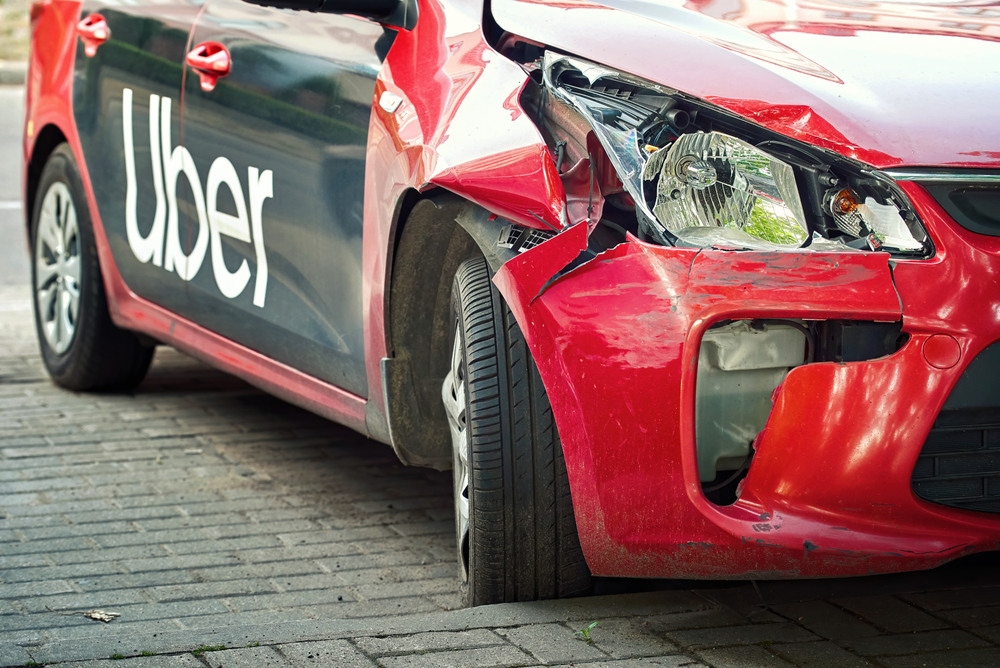
A ride home from Rainey Street at one in the morning. A green light on Cesar Chavez. Then the sound of metal, and a stranger’s car sideways in the intersection.
Who pays for your injuries depends on one fact almost nobody thinks about at the scene: what the rideshare app was doing at the moment of impact. Texas regulates transportation network companies under Occupations Code Chapter 2402 and sets their insurance requirements in Insurance Code Chapter 1954. This guide explains who pays after an Uber or Lyft accident in Texas, what changes at each stage of a ride, and how your claim differs depending on whether you were a passenger, another motorist, the rideshare driver, or on foot.
Why the App Decides Who Pays, Not the Accident Itself
In an ordinary car accident you ask who ran the light. In an Uber or Lyft accident you ask that, and then a second question: what was the driver’s status in the rideshare app when the accident occurred?
In a rideshare accident, Texas law stacks insurance coverage by that status. The ceiling can shift by hundreds of thousands of dollars based on whether a ride request had been accepted.
Insurance coverage depends on data Uber and Lyft hold. Not on anything visible at the curb.
What Are the Coverage Periods in a Texas Rideshare Accident?
Under Chapter 1954, Texas law splits a rideshare driver’s shift into stages. Uber and Lyft both build their insurance policies around that structure, and understanding how rideshare insurance works starts here.
The App Is Off
The driver is running errands. Personal auto insurance applies exactly as it would for any other car on I-35, comprehensive coverage included. Uber and Lyft owe nothing.
Logged On and Waiting for a Ride Request
Section 1954.052 requires liability coverage of at least $50,000 for bodily injury to one person, $100,000 per incident, and $25,000 for property damage. Uninsured motorist and personal injury protection coverage must sit in that policy too.
A Ride Accepted, Driver On the Way
Under Section 1954.001 a prearranged ride starts the instant the driver accepts a request through the digital network. Higher limits attach before the passenger opens the door.
Actively Transporting a Passenger
Section 1954.053 requires a total aggregate limit of $1 million for death, bodily injury, and property damage per incident. That limit holds until the last rider steps out of the rideshare vehicle.
You may hear the waiting period called contingent liability coverage. Texas does not leave it contingent: Section 1954.051 requires primary insurance policies, so contingent liability coverage does not decide a Texas Uber or Lyft accident.
If You Were a Passenger in an Uber or Lyft
You hold the strongest position of anyone in an Uber or Lyft accident. From the moment the driver accepts the ride until you exited, the $1 million layer applies, no matter which driver caused the rideshare accident.
If the rideshare driver caused the accident, you recover damages from Uber’s insurance or Lyft’s. If a third party driver caused it, you claim against that motorist first, with the rideshare company’s uninsured and underinsured motorist coverage waiting behind when their limits run short.
Rideshare passengers can recover damages for:
- emergency treatment, imaging, surgery, and follow-up
- lost wages and reduced future earning capacity
- ongoing medical expenses from the injury
- physical pain and mental anguish
- physical impairment or disfigurement
So yes, you can pursue compensation if your Uber crashes. Rideshare passengers give up nothing by getting in.
If a Rideshare Driver Hit Your Car
An Uber or Lyft driver turned across Guadalupe near the University of Texas and hit your car.
Your claim runs against the at fault driver for injuries and property damage, and which insurance policies respond turns entirely on that driver’s status. With a passenger aboard or a ride accepted, you are dealing with a $1 million commercial layer. Logged on and empty, you are working inside far smaller limits. App off, and you have an ordinary car accident against the driver’s personal insurance.
If You Were the Uber or Lyft Driver
Your position is the most exposed. The rideshare company you drive for is not your employer, and your own carrier may want no part of the loss.
Section 1954.151 lets a personal auto insurer exclude any loss occurring while you are logged on or engaged in a prearranged ride. Section 1954.152 confirms your personal policy need not cover you while transporting passengers for compensation. Rideshare drivers discover this after an accident.
Two things close that gap:
- a rideshare endorsement purchased on your personal auto insurance before you ever log on
- contingent comprehensive and contingent collision coverage through Uber or Lyft, which repairs your own rideshare vehicle only if you already carry comprehensive coverage personally, and carries a deductible
When another motorist caused the rideshare accident, you recover compensation from that driver like anyone else would.
If You Were Hit While Walking or Biking
Pedestrians and cyclists sit inside the same insurance coverage structure that Uber and Lyft build for passengers, and downtown Austin produces plenty of these accidents during ACL and SXSW surge hours.
An Uber driver actively transporting passengers triggers the $1 million limit. A driver circling with the app open but no ride accepted triggers the smaller one. That distinction is invisible to you and decisive.
A driver reading a fresh ride request is not reading the crosswalk. That is distracted driving.
What Happens When Third Party Drivers Caused the Accident?
Uber and Lyft insurance policies are not always the first to pay. When third party drivers cause the rideshare accident, the at fault driver’s third party liability coverage comes first, and Texas minimum limits are thin.
Once the third party drivers’ limits run dry, the search moves down:
- underinsured motorist coverage inside the rideshare insurance policies
- your own uninsured and underinsured motorist coverage
- personal injury protection on either policy
Multiple insurance policies collide, and multiple insurers argue over which owes. Sorting out the liable parties is the real work of rideshare accident claims.
Can You Sue Uber or Lyft Directly?
Usually not, and the reason is structural. Occupations Code Section 2402.114 treats rideshare drivers as independent contractors rather than employees when all of the following hold:
- the rideshare company does not set the driver’s hours
- the driver stays free to use competing rideshare services
- the company does not limit territory
- the driver may hold other work
- both sides sign a written agreement saying so
Uber and Lyft build their contracts to satisfy every condition.
Independent contractors generally do not make the rideshare company liable for their negligence. That closes the door most people try first.
The door that stays open is insurance. Section 1954.051 requires primary automobile insurance covering the driver while logged on and while engaged in a prearranged ride, maintained by the driver, by the rideshare company, or by both. You do not need the company held liable to reach that money.
How Does Your Own Coverage Fit In?
Your personal policy matters even when you were only a passenger. Texas insurers must include uninsured and underinsured motorist coverage under Insurance Code Section 1952.101 unless you rejected it in writing. Personal injury protection follows a similar rule.
Check for these before assuming Uber and Lyft insurance policies are your only source:
- uninsured and underinsured motorist coverage on your own auto policy
- personal injury protection, which pays medical bills and some lost wages regardless of fault
- health insurance, including any subrogation terms attached to it
- coverage carried by a household family member
Injured parties leave one of these unopened all the time. Personal injury claims often outrun the first insurance claim offer.
Why the Ride Record Decides the Case
The one fact that decides whether a $1 million policy or a minimum policy applies is the driver’s status at impact, and it lives in records Uber and Lyft control.
Texas law does force disclosure. Insurance Code Section 1954.154 requires the rideshare company and its insurer to assist an insurance claim investigation by providing directly interested persons:
- the precise times the driver logged on and off in the 12 hours before and after the accident
- a clear description of the insurance coverage, exclusions, and limits
Occupations Code Section 2402.151 requires transportation network companies to keep individual ride records at least five years.
Preserve your own copy anyway. The fastest evidence in any accident involving a rideshare vehicle is the trip screen in your own app right now.
What Should You Do After a Rideshare Accident in Austin?
Transportation Code Section 550.026 requires immediate notice to police after any accident involving injury, death, or a vehicle that cannot be safely driven. Call 911 first.
Then work the list:
- seek medical attention immediately, even with no visible injuries
- screenshot the ride in the rideshare app, with driver name, license plate, timestamps, and fare receipt
- photograph all vehicles, the accident scene, and final positions
- get the responding officer’s name and the police report number
- collect numbers from other drivers and accident witnesses
- say nothing recorded to insurance adjusters until you have advice
Section 2402.104 already requires the rideshare app to show the driver’s name and photo and the vehicle make, model, and license plate. Capture that screen.
How Long Do You Have to File a Rideshare Accident Claim in Texas?
Civil Practice and Remedies Code Section 16.003 gives you two years from the day the cause of action accrues to file suit for personal injury. A wrongful death case runs two years from the date of death.
Two years sounds generous. It is not, once records requests, treatment, and negotiations with three insurers eat the calendar.
Why Choose The Pabst Law Firm
The Pabst Law Firm is a family-run, boutique personal injury firm in Austin. Frank and Nicky Pabst handle every case personally. You talk directly to your attorney, not intake staff, paralegals, or layers of case managers.
We are coverage strategists. Rideshare accident cases show why that matters: one Texas Uber or Lyft accident can involve the rideshare company’s commercial layer, the driver’s personal auto insurance, a third party motorist’s liability coverage, and your own uninsured motorist and personal injury protection benefits. Four policies, four adjusters, and four arguments about which one pays. We identify every layer, pin down the driver’s status, and pursue the maximum compensation available instead of settling with whichever insurer answers first.
We are treatment-first. Healing comes before settlement talks.
We work on a contingency fee basis, meaning you pay nothing unless we recover compensation for you.
We are bilingual. Hablamos español. We serve Austin’s diverse community in English and Spanish.
Get a Free Consultation
If you were hurt in an Uber or Lyft accident, the two year clock is already running. A free consultation with an Uber accident lawyer who knows how these insurance policies stack tells you which layers apply.
Call The Pabst Law Firm at (512) 641-2676 or fill out our online form for a free consultation. Learn more about our rideshare accident cases and car accident claims.
We serve clients throughout Austin, Cedar Park, Round Rock, Georgetown, Pflugerville, Kyle, Buda, San Marcos, and all of Central Texas.


 (512) 641-2676